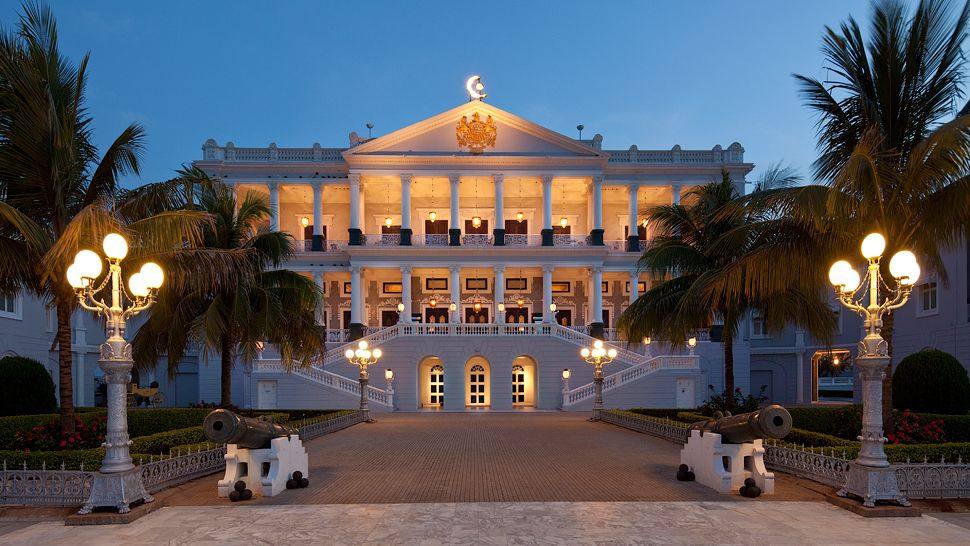
Falaknuma Palace sits above Hyderabad the way a crown sits on a head. It was built in 1884. When it reopened on 7 November 2010, it had been under restoration for ten years. Sixty rooms. Thirty two acres. A decade of patient labor, guided in its details by Princess Esra.
The building itself demanded the patience. Construction ran from March 1884 to 1893. The conversion to a hotel began in 2000, with Wimberly Allison Tong and Goo among those guiding the work. The palace had waited more than a century for its rescue. The rescuers then took another ten years.
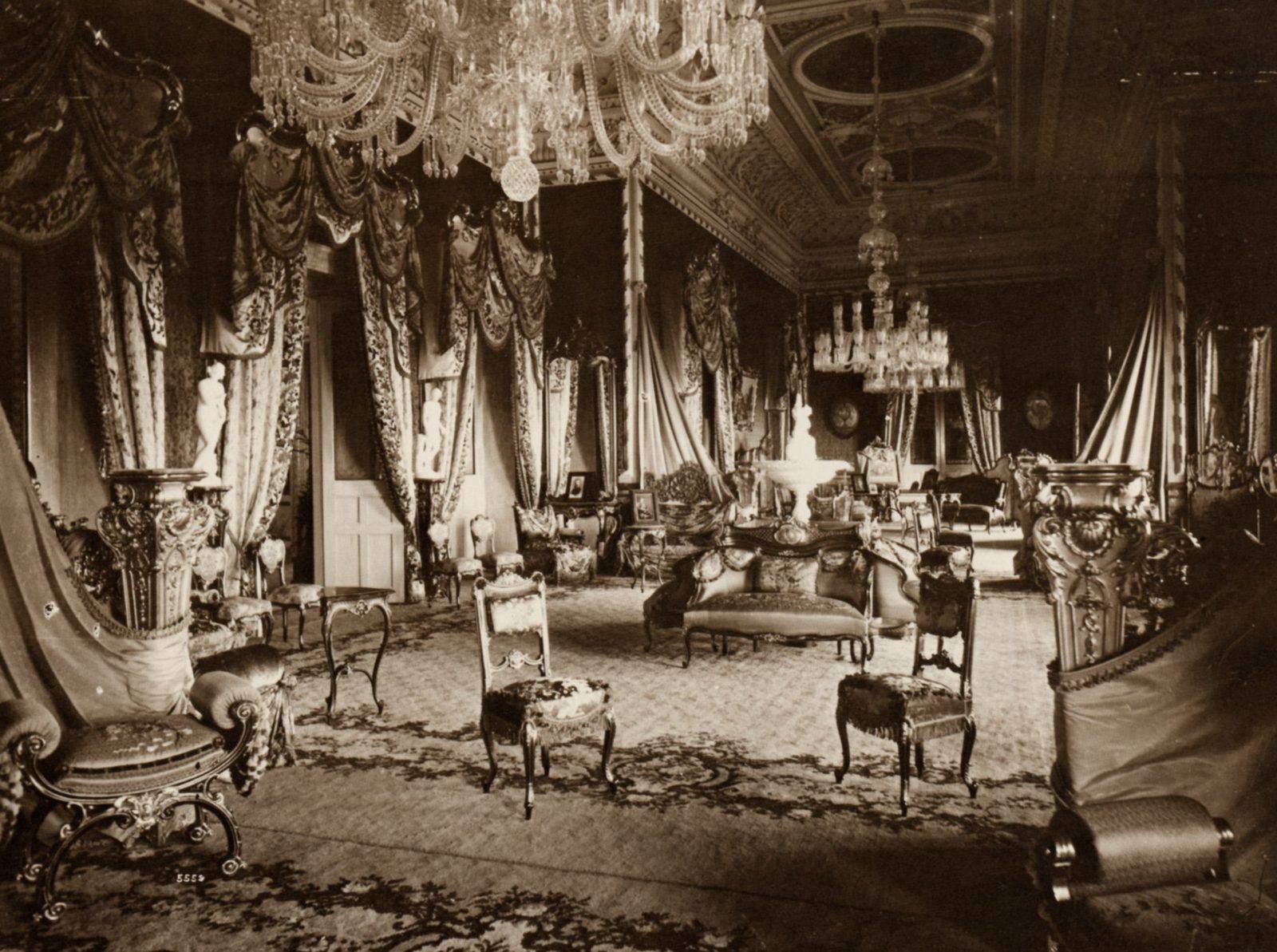
The restoration was a seminar in Indian craft. The project team included Rahul Mehrotra and Anuradha Naik, working alongside the textile scholars Martand Singh and Rahul Jain. It was not managed as construction. It was managed as research.
Carpets were recreated thread by thread. Woodwork and tassels were remade by hand. Nothing was approximated. Each surface was treated as a document, and each document was returned to legibility.
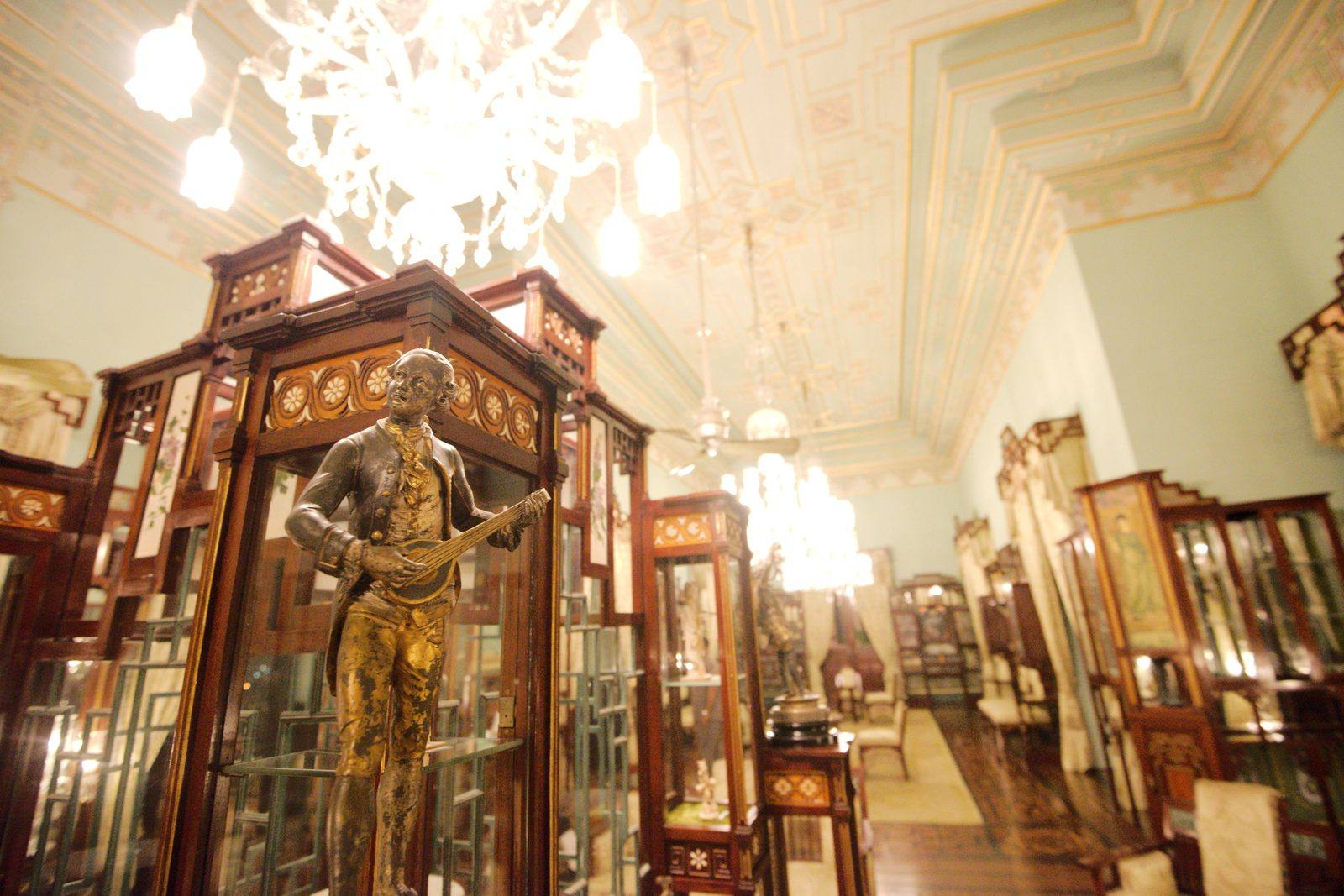
The chandeliers were taken down, cleaned, and rewired for modern current. The trompe l'oeil leather on the walls could not be saved in its original material, because that material can no longer be sourced, so it was repainted by hand in the same illusion. Restoration is sometimes replication. Replication, done honestly, is still stewardship.
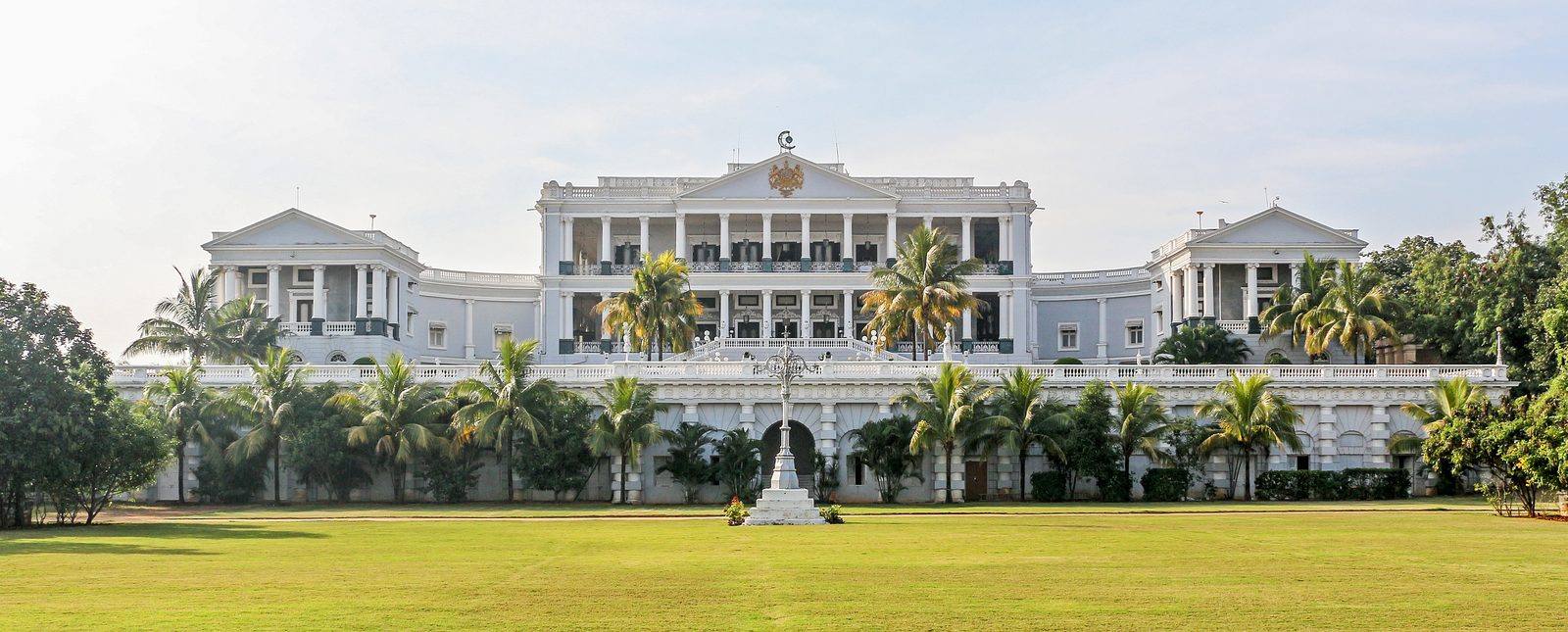
Falaknuma is the argument that craft is infrastructure. Without the dyers and the gilders and the men who knew how plaster wants to behave, the palace is only a beautiful ruin with a view. With them, it is a hotel.