On October 16, La Reserve will open its first Italian address. La Reserve Firenze is not a hotel in the usual sense: it is six private apartments, one to three bedrooms, set inside a restored 15th-century palazzo in the Oltrarno district of Florence, across the Arno from the city center. The brand's own site now carries the date as a fixed commitment, and with a week to go, this is the rare opening where the details are all on the table.
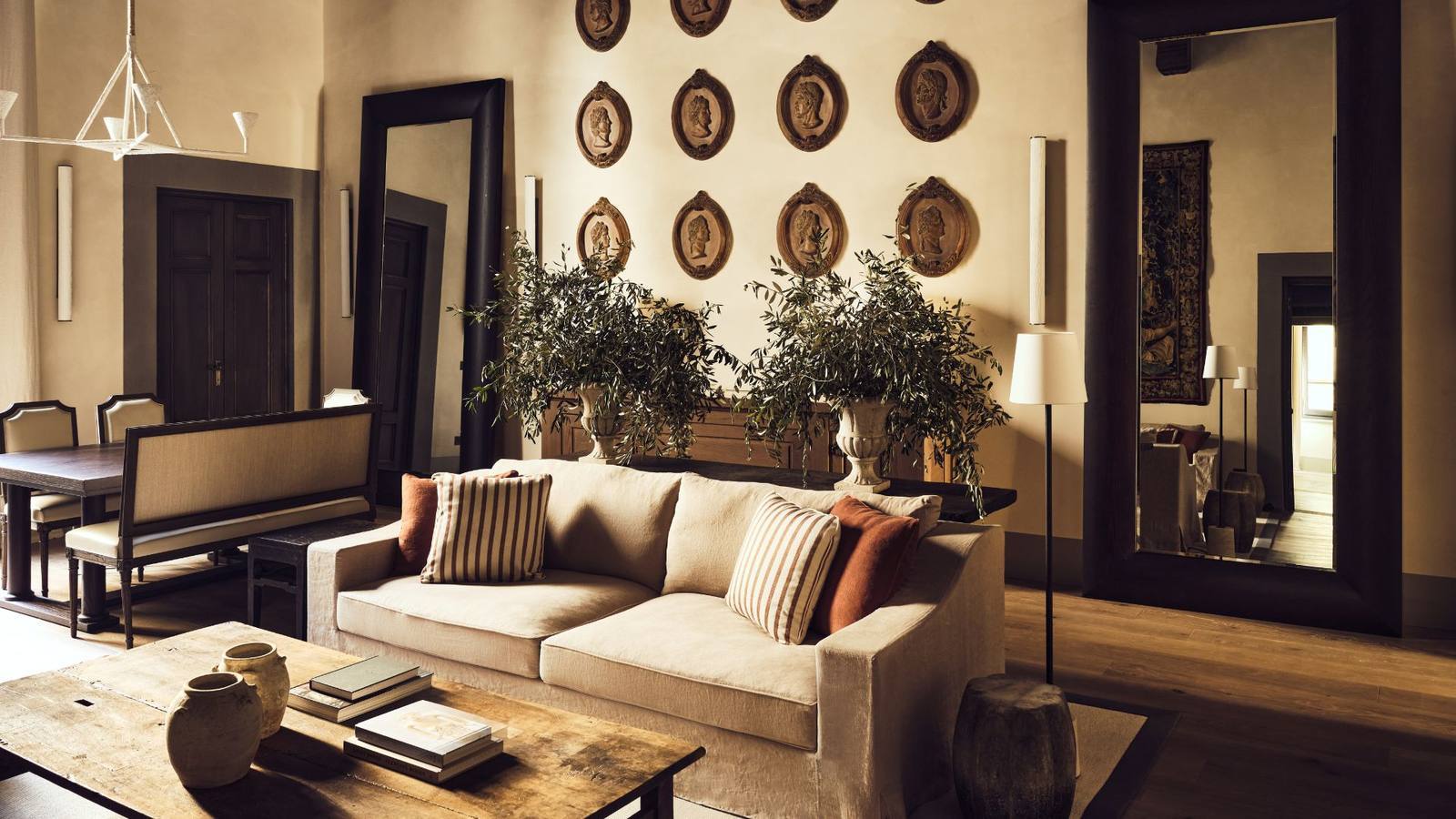
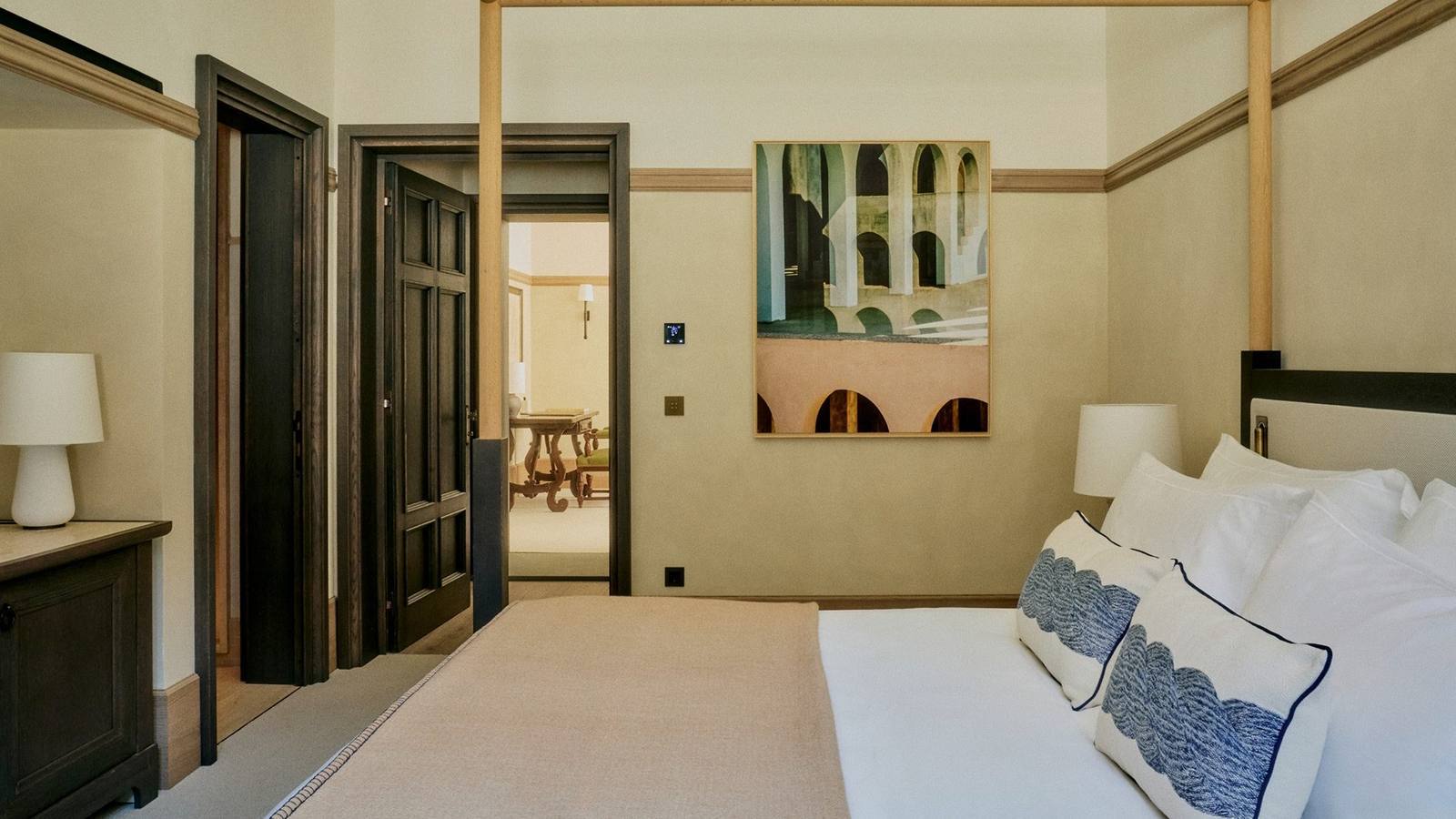
The building is the story, as it always is with La Reserve. The palazzo stands at Via Santo Spirito, 6, in a quarter the brand describes as the part of Florence that has kept its soul, away from the crowds and a short stroll from the Tuscan capital's landmarks. The restoration was entrusted to interior design duo Gilles & Boissier, whose work here pairs contemporary refinement with the grandeur of historic architecture, in the property's own words. The phrase is doing real work: this is not a museum piece but a working residence, reimagined as something personal and privileged.
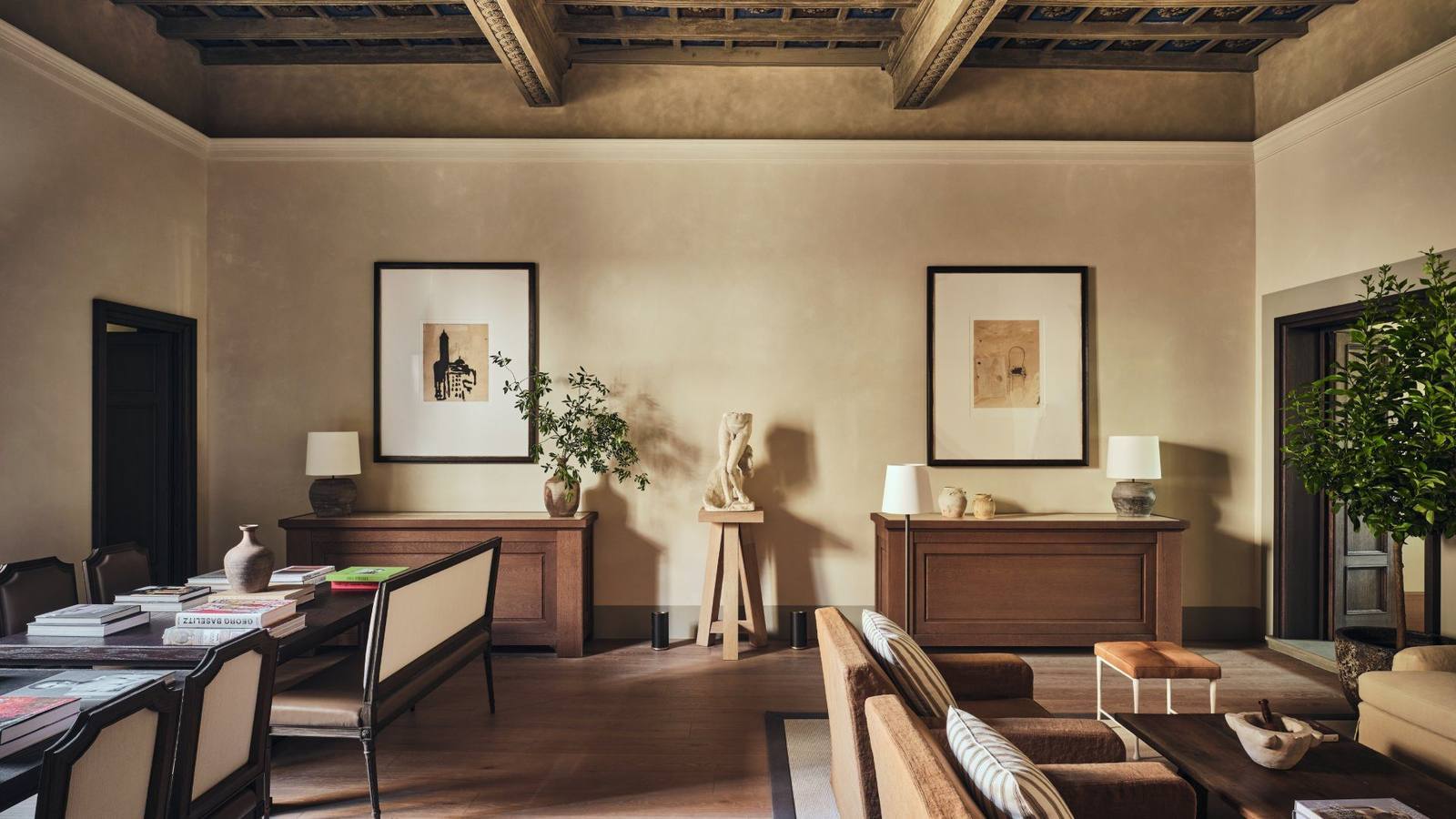
The six apartments are the entire inventory. The official site lists a one-bedroom with frescoes at 175 square metres; a two-bedroom Piano Nobile at 170 square metres; a two-bedroom with Santo Spirito view at 180 square metres; two-bedroom apartments with frescoes at 205 and 210 square metres; and a three-bedroom duplex with a 55-square-metre terrace, 205 square metres inside. Every apartment is designed, in the trade press's telling, as a private Florentine residence rather than a suite with a marketing name. Trade reports give the range as 180 to 210 square metres; the property's own site puts the smallest at 170, and this article follows the property.
What is inside follows the brand's recipe of restraint. The official site describes décor that pairs contemporary refinement with the grandeur of historic architecture, and the apartment list does the rest of the talking: frescoes in the one-bedroom and in two of the two-bedroom apartments, a Santo Spirito view in another, and the duplex's own 55-square-metre terrace above the quarter. This is a residence first and a hotel product second, which is exactly the register La Reserve wants to strike.
The terrace deserves its own paragraph, because the property clearly thinks so. "At sunset, the terrace looks out over Santo Spirito and the Pitti Palace," the official site says. "The right place for a Negroni, invented here in Florence." The line is doing double duty: it sells the view, and it sells the city's claim on the cocktail, a reminder that Florence's pleasures are older than the hospitality industry's vocabulary for them. Guests who would rather stay inside have the library, devoted to Italy, art and design, and the playroom with its billiards table, while the shaded patio offers the kind of greenery the Oltrarno does best. The Palazzo Pitti is a five-minute walk; cross the Ponte Vecchio and Florence's main monuments are on the other side.
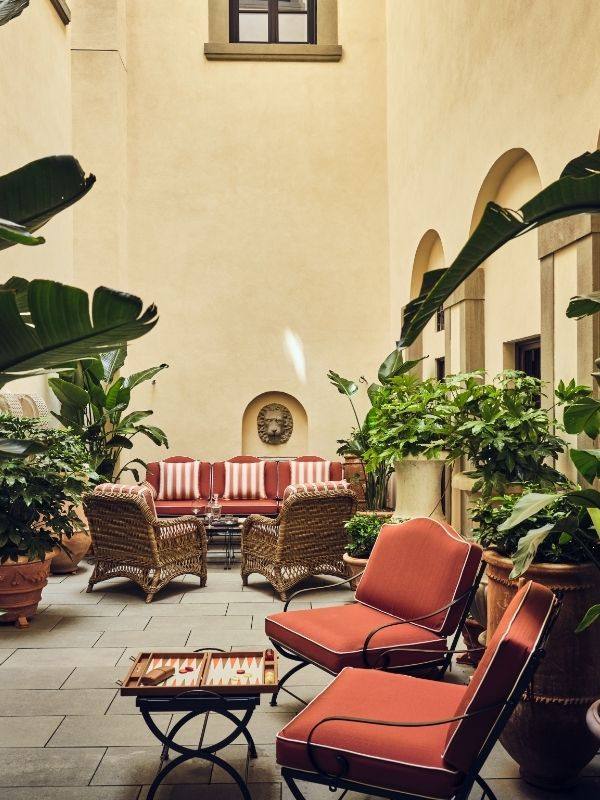
The service model is the private-homes one the brand has been refining across its portfolio. The property's own services pages promise a butler, a housekeeper and a concierge as standard, bespoke arrangements shaped around each stay, and a fully equipped kitchen in every apartment, stocked from Santo Spirito market or handed over to a private chef. Its experiences programme promises, in the brand's own phrasing, rare and privileged moments drawn from the riches and secret addresses of the Tuscan capital. Beyond the apartment doors, guests have the library, devoted to Italy, art and design, the playroom with its billiards table, the gym and the shaded patio, and the terrace that looks out over Santo Spirito and the Pitti Palace at sunset.
Context matters here because La Reserve is a collection with a point of view. The brand is the signature line of Michel Reybier Hospitality, and its sister properties are La Reserve Paris, La Reserve Ramatuelle, La Reserve Geneve and La Reserve Eden au Lac Zurich. Each is a study in discretion; Firenze is the first time that study has been applied to Italy, and to a palazzo rather than a purpose-built hotel. For the Oltrarno, a district of artisan workshops and Renaissance masterpieces, it is a fitting first chapter.
A note on timing, because dates move in this business. Earlier coverage of the project pointed to a June 2026 opening; the brand's own site and the current trade reporting give October 16, 2026, and this article uses the current official date. Florence in October, with six apartments and a terrace above Santo Spirito, is an arrival the brand has been four years preparing. The palazzo has waited five centuries; a week more will not hurt.